
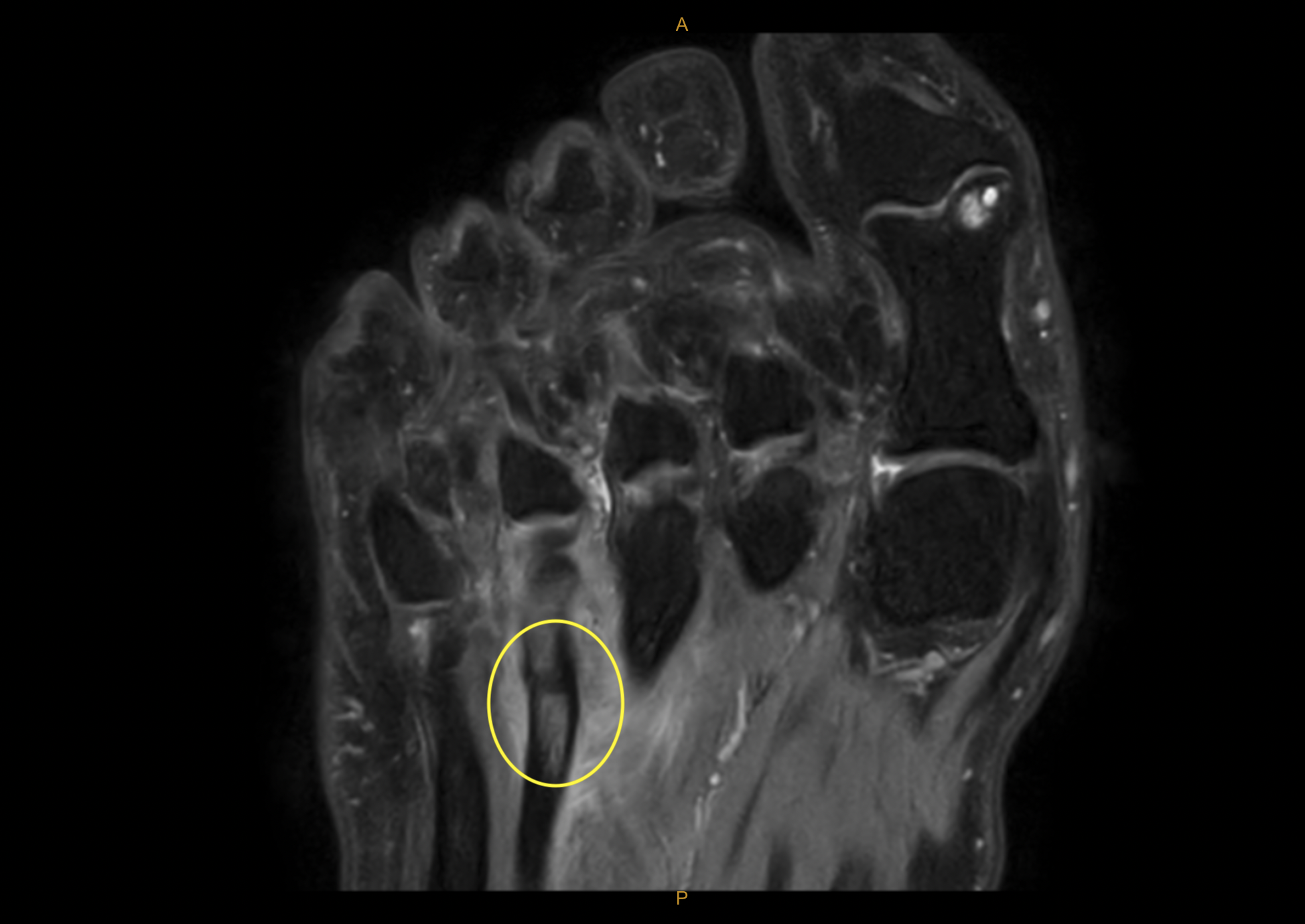
Stress Fractures
Stress fractures are overuse injuries that result in a small crack within a bone, often the long bones of the foot (metatarsals). Stress fractures may remain elusive on X-Ray for several weeks after first developing pain, and often require CT or MRI to diagnose.
While rest is the most important treatment, life must go on – demanding more active treatment. At Prahran Foot Clinic radial shockwave therapy1, custom foot orthotics, carbon fibre shoe inserts, footwear modification and even CAM walkers (moon boots) can be utilised to resolve symptoms faster and get you back on your feet.
1. Leal et al
Why choose Prahran Foot Clinic?
At Prahran Foot Clinic, we understand the challenges of managing stress fractures and the desire to resume your active lifestyle. While rest is crucial for the healing process, we also recognise that life must go on, sometimes demanding more active treatment approaches.
Our dedicated team offers a range of innovative solutions to accelerate the recovery from stress fractures and get you back on your feet. We utilise radial shockwave therapy, a cutting-edge treatment that delivers high-energy shockwaves to stimulate healing and promote bone regeneration. This non-invasive therapy has shown promising results in enhancing recovery times and relieving pain associated with stress fractures.
In addition to shockwave therapy, we often utilise custom foot orthotics to reduce abnormal load to the affected area. These orthotics provide support and proper alignment to the foot, reducing stress on the affected bone and facilitating the healing process. Carbon fiber shoe inserts and footwear modifications can also be employed to alleviate pressure and promote optimal healing.
For more severe stress fractures or cases where rest and immobilisation are necessary, CAM walkers (moon boots) may be utilised. These specialised walking boots provide support and protection to the foot, allowing for controlled weight-bearing while minimising further damage to the fractured bone.
Consult With
Expert Podiatrists
Our highly skilled team of professional podiatrists are at your service to give you the best footcare.
Get in touch
Have a question or looking to book an appointment? Reach out and one of our friendly staff will get back to you as soon as possible. If you’re looking to book an appointment online, please visit this link to make a booking.
Opening Hours
Mon-Fri: 10AM-7PM
Sat: 9AM-1PM