
Radial Shockwave Therapy
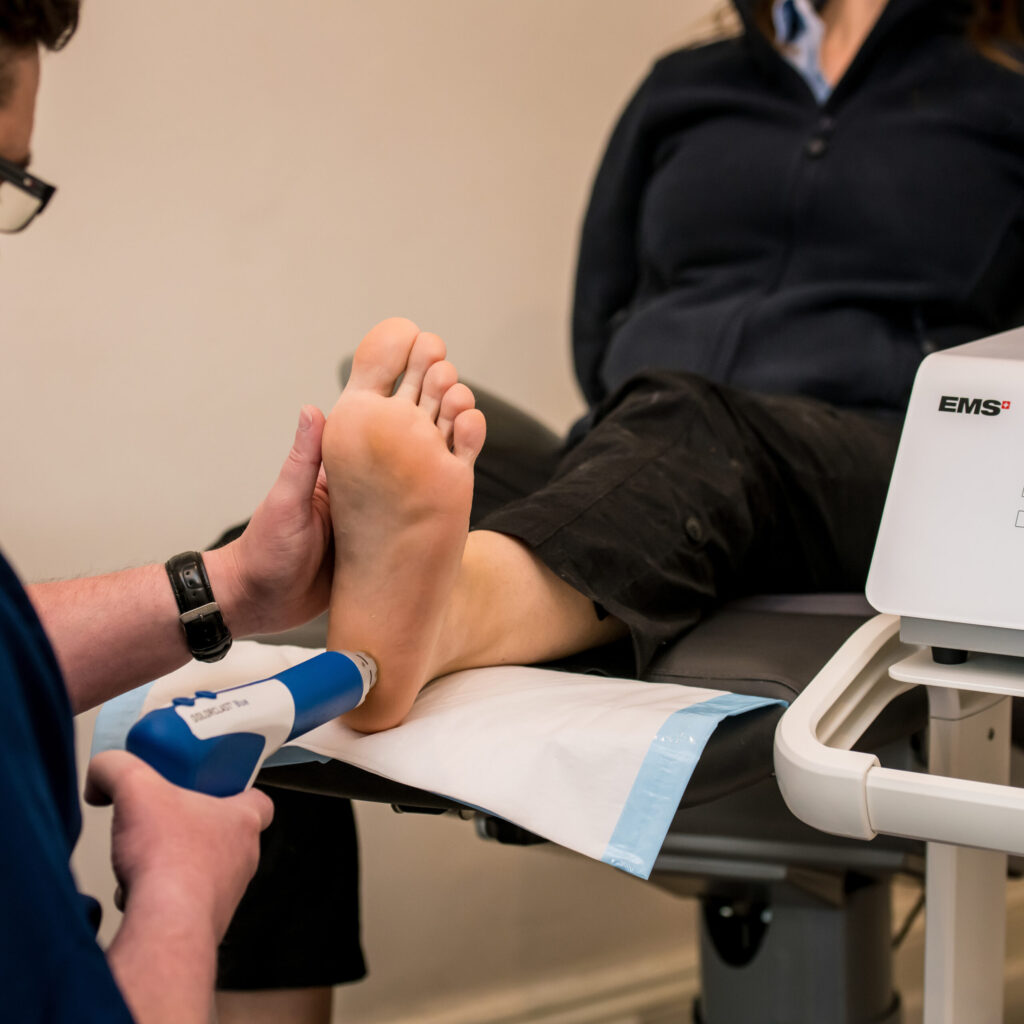
Prahran Foot Clinic is excited to offer radial shockwave therapy as a solution to chronic foot and leg pain. Shockwave therapy (which in fact is an acoustic sound wave) travels through the tissues in a manner that is proven to reduce and eliminate pain and promote tissue regeneration. It can be utilised for many soft tissue or musculoskeletal conditions. Find out how radial shockwave therapy can help your foot health by booking an appointment at Prahran Foot Clinic.
Why choose Prahran Foot Clinic?
While shockwave machines are not uncommon, machines backed with a strong evidence base and an FDA approval are far more scarce. Prahran Foot Clinic only operates EMS Dolorclast machines – the only line which carries FDA approval and the machine which carries the most scientific research. This is critical for the patient as you can be assured that the treatment you are provided is guaranteed to meet the parameters that the current research requires – other substandard machines fail to generate the required power, offering only a gentle massage and the placebo effect, neither being long term solutions.
Consult With
Expert Podiatrists
Our highly skilled team of professional podiatrists are at your service to give you the best footcare.
Frequently Asked Questions
How Does Shockwave Therapy Work?
Prahran Foot Clinic’s high powered EMS Dolorclast shockwave machine generates acoustic sound waves that travel through targeted tissues, in turn causing cavitation within the tissues that have a twofold effect – first, chronic pain-inducing chemicals are dispersed from the site, and second, tissue repair is activated.
What’s Involved? Is it safe?
Most patients require a course of between three and five treatments, usually lasting no more than 5 minutes for each application, with each treatment occurring between 5 and 7 days apart. Shockwave therapy is a safe and proven treatment modality. Our podiatrists will screen you for any relevant contraindications prior to treatment.
Is the Treatment Painful?
In order for the treatment to be successful, there should be some mild to moderate discomfort for a few minutes of the treatment, however pain relief from the process soon follows in the minutes after the treatment.
How Much Does it Cost to Have Shockwave Treatment Performed?
Fees are $65.00 per session in addition to your relevant consultation fee. You may be able to claim this through your private health fund. Shockwave therapy can often be initiated during your initial consultation. Results are often felt within minutes for most patients.


Research 2. Radial Shock Wave Devices Generate Cavitation

Get in touch
Have a question or looking to book an appointment? Reach out and one of our friendly staff will get back to you as soon as possible. If you’re looking to book an appointment online, please visit this link to make a booking.
Opening Hours
Mon-Fri: 10AM-7PM
Sat: 9AM-1PM