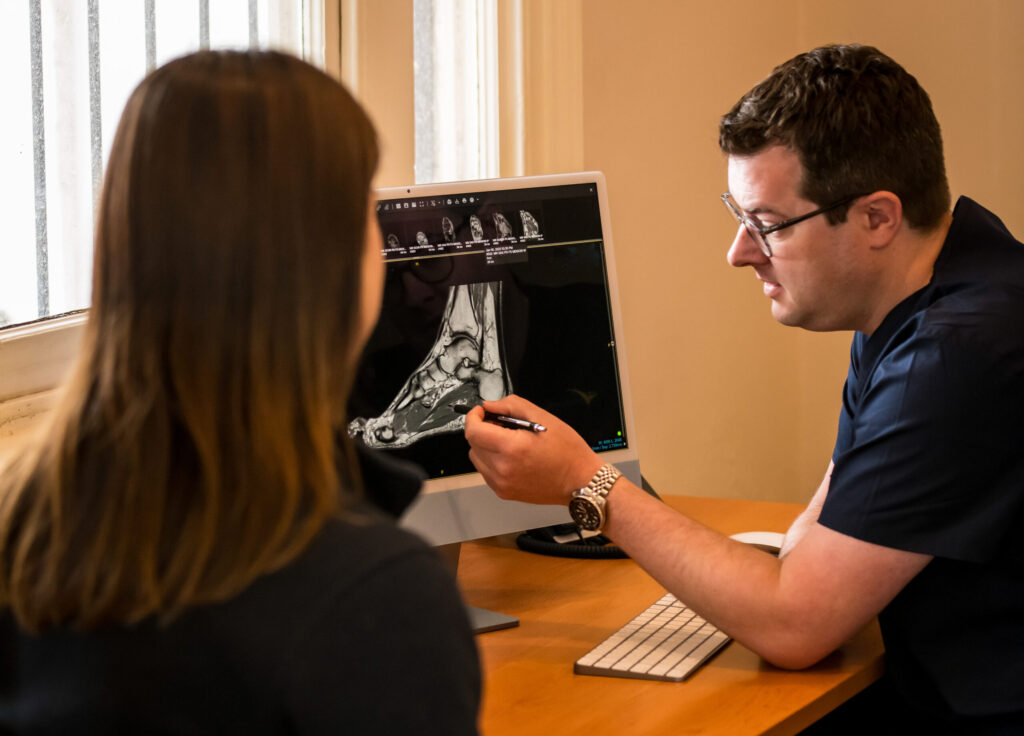
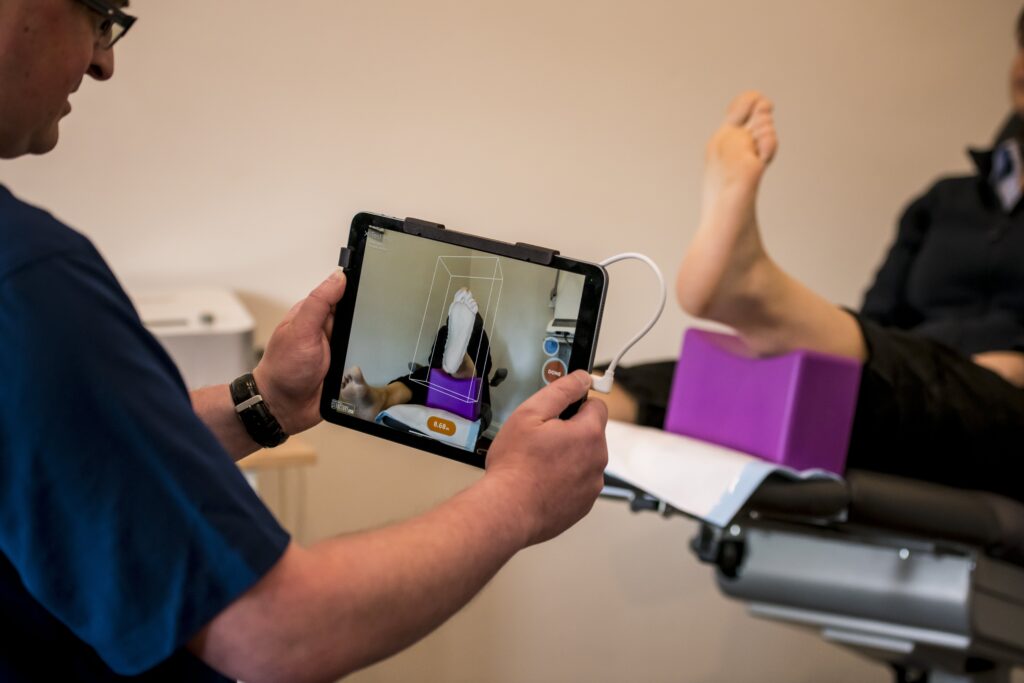
Podiatrist assessing a patient with knee pain at Prahran Foot Clinic

Podiatry care for knee pain in Prahran

Knee Pain Treatment in Prahran

Knee pain can make walking, stairs, work and exercise difficult. Our podiatrists assess how the knee, foot, ankle, gait, footwear and activity load may be contributing, then provide a clear plan to reduce pain and improve function.

Practical advice and initial management begin at your first appointment. If imaging or referral is required, your podiatrist will explain why and arrange the appropriate next step.

Common causes of knee pain

Knee pain can arise from several structures and is not always caused by the knee alone. A thorough assessment helps identify the likely source and the factors keeping it irritated.

01

Knee osteoarthritis

Knee osteoarthritis can cause pain, stiffness, swelling and reduced confidence with walking or stairs. Symptoms often vary from day to day and can usually be managed with a well-planned non-surgical approach.

02

Patellofemoral pain

Pain around or behind the kneecap is often aggravated by stairs, squatting, running or prolonged sitting. Lower-limb strength, loading, footwear and movement patterns may all contribute.

03

Patellar tendinopathy

Often called jumper’s knee, this causes load-related pain at the lower edge of the kneecap or along the patellar tendon, particularly during running, jumping or repeated squatting.

04

Bursitis and other causes

Bursitis, referred pain, meniscal or ligament injury and other conditions can also cause knee pain. Your assessment helps identify the likely source and whether referral is required.

Assessment and diagnosis

Your appointment considers the whole lower limb—not just the painful area—so that treatment can be directed at the factors most relevant to you.

Side-profile knee beside a clipboard representing a comprehensive lower-limb assessment

Comprehensive lower-limb assessment

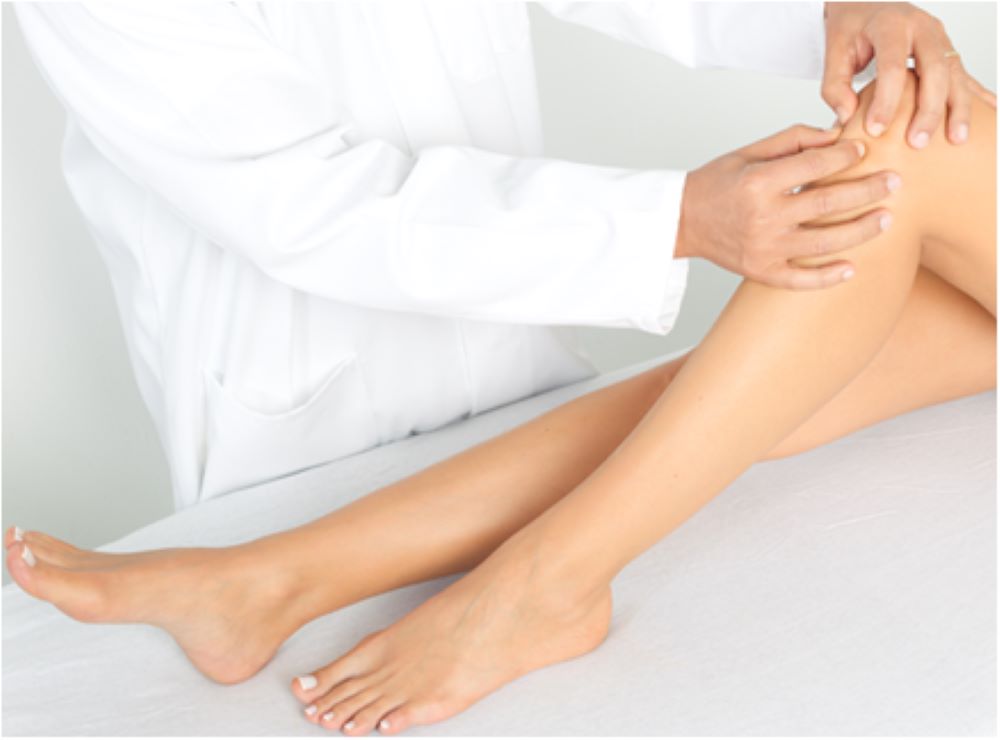
Your podiatrist will discuss your symptoms, activity, medical history and goals, then assess the knee, hip, ankle and foot. Strength, joint movement, gait, footwear and the activities that reproduce your pain are considered.

Knee X-ray A stylised black-and-white frontal X-ray of a knee.

Imaging or referral when required

Many knee conditions can be identified through a clinical assessment. When imaging or another clinician’s opinion is required, we will explain why and arrange the appropriate X-ray, ultrasound, MRI or referral.

How knee pain is treated

Treatment is individualised to your diagnosis, symptoms, goals and daily activities. Your plan can combine several approaches and is adjusted as your function improves.

01

Activity management and progressive exercise

Clear advice helps you modify aggravating activities while staying active. A progressive strengthening and loading plan supports confidence, capacity and a safe return to walking, work or sport.

02

Footwear, taping and foot orthotics

Footwear recommendations, taping and foot orthotics can improve comfort and redistribute load through the lower limb when assessment shows they are appropriate.

03

Shockwave therapy

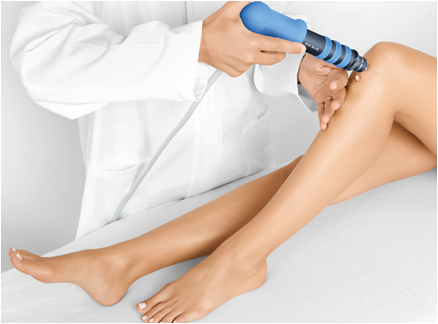
Radial shockwave therapy can be used for persistent patellar tendinopathy and some presentations of knee osteoarthritis. It is incorporated into a broader activity and rehabilitation plan.

04

Injection therapy and coordinated referral

For appropriate presentations, regenerative injection therapy (prolotherapy) may form part of the plan. When another provider’s input is needed, we will explain the reason and coordinate the referral.

Two common knee pain presentations

Knee osteoarthritis

Maintaining movement and function

Knee osteoarthritis commonly causes pain, stiffness or swelling and can affect walking, stairs and everyday activity. Diagnosis is often based on a comprehensive clinical assessment, without routine imaging.

Education, activity planning and tailored exercise form the foundation of care. Footwear, taping, foot orthotics, shockwave therapy and coordinated care with other health professionals can be included according to your needs.

Patellar tendinopathy

Building tendon capacity

Patellar tendinopathy causes load-related pain around the patellar tendon, often during running, jumping or repeated squatting. Treatment focuses on managing load and progressively rebuilding tendon and muscle capacity.

Shockwave therapy can be incorporated for persistent symptoms alongside rehabilitation, with taping, footwear changes or foot orthotics used when lower-limb assessment identifies a relevant role.

Evidence-informed care: our recommendations are guided by current clinical evidence, including the Australian Osteoarthritis of the Knee Clinical Care Standard and current research on exercise and adjunctive treatment for lower-limb tendinopathy.

Frequently asked questions

Can a podiatrist help with knee pain?

Yes. Podiatrists assess how the foot, ankle, gait, footwear and activity load interact with the knee. We can provide treatment within our scope and arrange referral when another practitioner’s input is required.

Do I need an X-ray or MRI?

Not always. Many common knee conditions can be identified through a clinical assessment. If your symptoms are unusual, another injury is suspected or imaging will change management, your podiatrist will explain and arrange the appropriate investigation.

Can foot orthotics help knee pain?

They can help when foot mechanics or lower-limb loading contribute to symptoms. Orthotics are not required for every person, so the recommendation is based on your assessment, footwear and treatment goals.

Is shockwave therapy used for knee pain?

Yes. Shockwave therapy can be incorporated for persistent patellar tendinopathy and some knee osteoarthritis presentations. Your podiatrist will confirm whether it is appropriate and explain how it fits within your broader treatment plan.

When should I seek urgent medical care?

Seek prompt medical assessment after a significant injury, if you cannot bear weight, the knee is locked, there is marked swelling, or the joint becomes hot and red. Fever or feeling unwell with a hot, swollen knee requires urgent medical attention.

Consult with Our
Experienced Podiatrists

Our experienced podiatrists provide personalised, evidence-based care for foot and ankle conditions.

  • Registered and experienced podiatrists
  • Personalised and attentive care
  • Evidence-based assessment and treatment options
  • Modern clinical equipment and rigorous infection-control procedures
  • Convenient Prahran location, minutes from Melbourne CBD
  • Evening and Saturday appointments available
Podiatrist discussing an ankle MRI scan with a patient

Get in touch

Have a question or need help arranging an appointment?
Contact our friendly team and we’ll respond as soon as possible.
Ready to book? Use our online booking system.