Dry Needling for Foot and Ankle Pain
Dry needling is one treatment option that may help manage muscle tightness and selected types of foot, ankle and lower-limb pain.
At Prahran Foot Clinic, dry needling is recommended only when appropriate following a podiatric assessment. It is usually used as part of a broader treatment plan tailored to your condition, activities and goals.
What is dry needling?
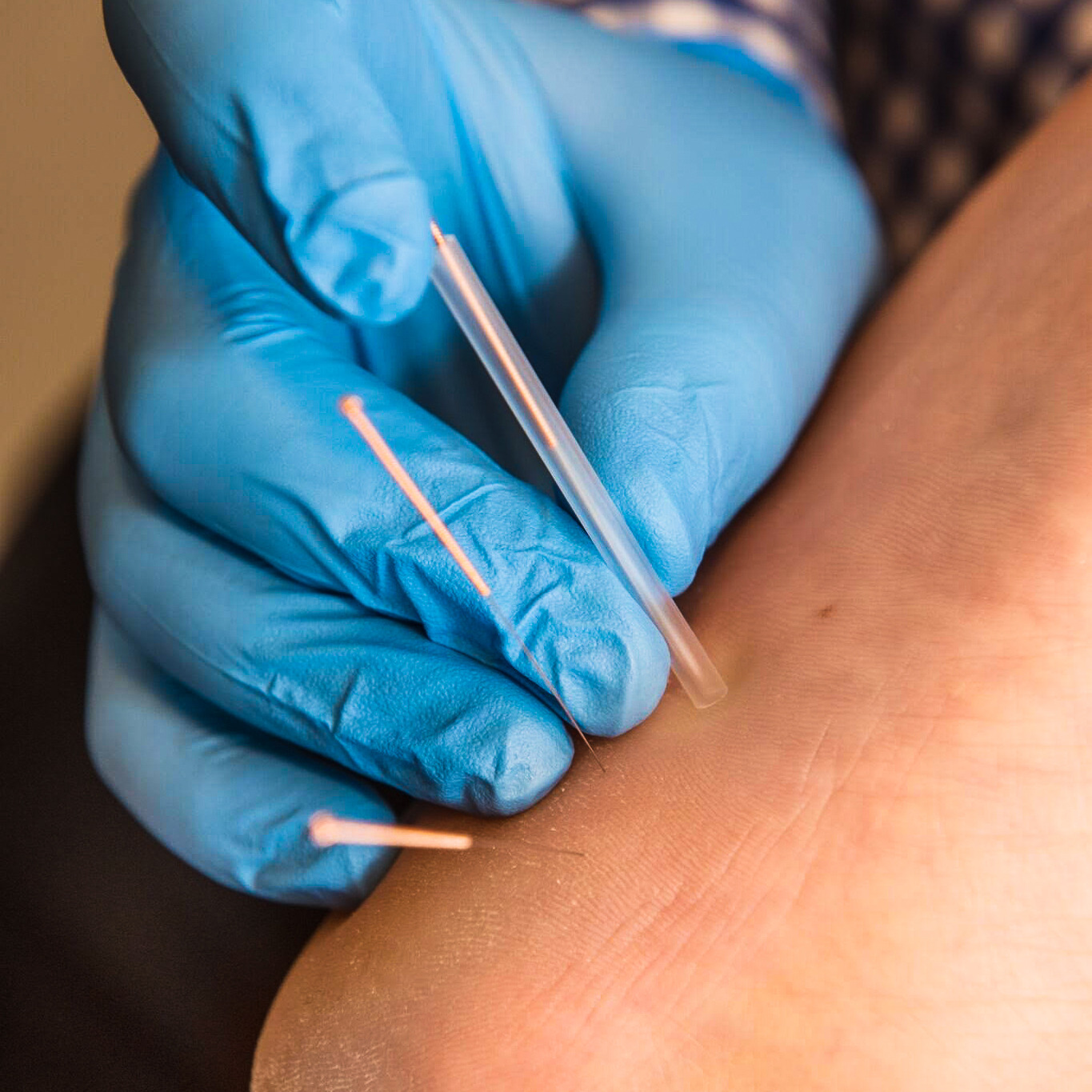
Dry needling uses sterile, single-use, fine filament needles placed into carefully selected areas of muscle. No medication is injected—the word “dry” distinguishes the technique from procedures that introduce a solution through a needle, such as prolotherapy.
Although it uses needles similar to those used in acupuncture, dry needling is based on an assessment of your muscles, movement and the factors that may be contributing to your symptoms.
When may dry needling be considered?
Depending on your assessment, dry needling may be considered when muscle tightness or tender trigger points appear to be contributing to pain or restricted movement.
It may form part of treatment for:
- Plantar heel pain
- Calf or foot muscle tightness
- Selected overuse-related foot and ankle conditions
- Lower-limb muscle pain affecting walking, work, exercise or sport
Dry needling is not appropriate for every condition or every patient. Your podiatrist will explain whether it is likely to be helpful in your circumstances.
What does treatment involve?
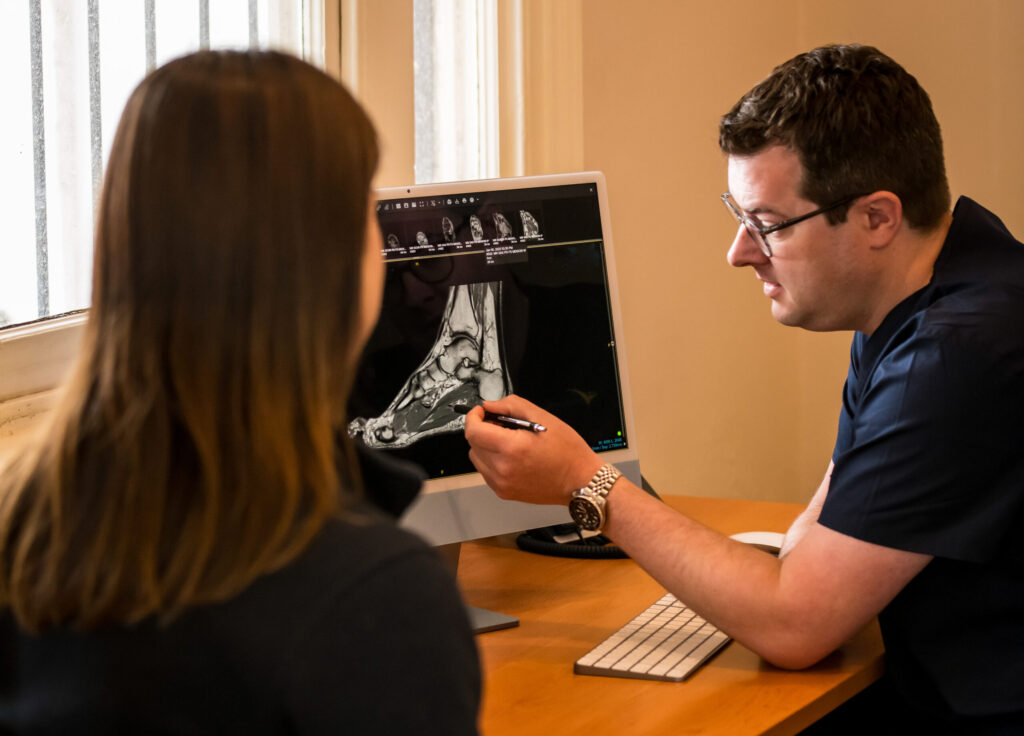
Before treatment, your podiatrist will explain why dry needling is being considered, which areas may be treated and what alternatives are available.
Some people feel a brief prick, ache or muscle twitch during treatment. The technique can be adjusted or stopped at any time if you feel uncomfortable.
What should I expect afterwards?
Temporary tenderness, aching or minor bruising can occur following dry needling. These effects are generally short-lived.
Your podiatrist will explain whether you need to modify exercise or other activities after treatment and what to do if your symptoms feel unusual or do not settle as expected.
Is dry needling suitable for everyone?
Not necessarily. Your podiatrist will consider your general health, medications, pregnancy, tendency to bleed or bruise, skin condition and comfort with needles before recommending treatment.
If dry needling is unsuitable or another treatment is more appropriate, we will explain the available alternatives.
Part of a broader treatment plan
Dry needling is rarely the sole focus of treatment. Depending on your needs, your care may also include exercise, load management, footwear advice, taping, orthotics or another appropriate treatment.
Frequently asked questions
Is dry needling the same as acupuncture?
No. The two techniques use similar fine needles, but their assessment methods and clinical reasoning differ.
How many appointments will I need?
This varies according to your condition and response. Your podiatrist will review your progress rather than recommending a fixed course of treatment for everyone.
Can I exercise after dry needling?
This depends on the area treated, your condition and the type of activity. Your podiatrist will provide advice that is appropriate for you.
Why choose Prahran Foot Clinic?
Established in 2007, Prahran Foot Clinic has been providing high-quality care for all foot and ankle conditions, using the latest, evidence-based treatments in a dedicated, stand-alone podiatry clinic.
Consult with Our
Experienced Podiatrists
Our experienced podiatrists provide personalised, evidence-based care for foot and ankle conditions.

Get in touch
Have a question or need help arranging an appointment?
Contact our friendly team and we’ll respond as soon as possible.
Ready to book? Use our online booking system.
Opening Hours
Mon–Fri: 10 am–7 pm
Sat: 9 am–1 pm